




Sleep Breathing Stack: Mastic Gum, Nasal Strips and Mouth Tape
A lot of people already use nasal strips or mouth tape and still feel like the daytime habit is missing.
The stack we use is simple: chew firm Chios mastic during the day, then nasal strips and careful mouth taping at night if your nose is clear. This is a nasal-breathing and sleep-comfort routine. It is not a treatment for sleep apnea or any disease.
If you snore loudly, gasp at night or have been told you stop breathing in sleep, see a clinician. Proven medical care comes first.
At a glance
| When | What to do |
|---|---|
| Daytime | Chew mastic 10 to 40 min, lips closed |
| Bedtime | Nasal strip across the bridge |
| Optional | Mouth strip, only if your nose is clear |
| Morning | Remove slowly, check skin |
What is the mastic, strips and tape stack?
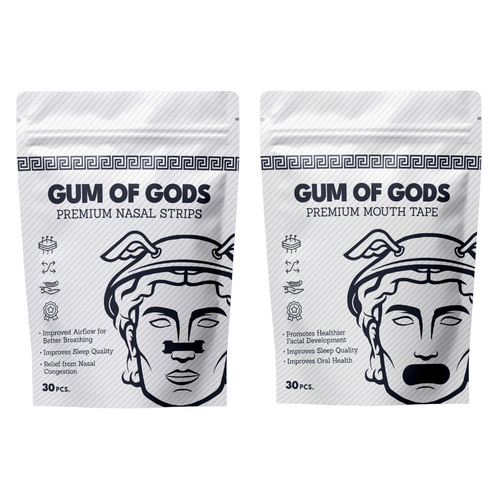
It is a day-plus-night habit. Daytime mastic works your face muscles with a lasting resin chew. At night, nasal strips open the nasal valve, and mouth tape is optional if you already breathe through your nose. The Classic Pack 3-month plan adds free mouth tape and nasal strips (see the product page).
That pairing is how customers use the kit, not a medical treatment.
Why start with daytime mastic gum?
Daytime resin sets the chew habit before you change anything about sleep. Chios mastic is a single tree resin. It starts firm, softens as it warms and lasts a long session. Regular gum base contains plastics under US rules (21 CFR 172.615). Different base, different chew.
Practical daytime use:
- Warm one or two pieces for 20 to 30 seconds.
- Chew 10 to 20 minutes at first, then build toward 20 to 40 minutes if your jaw feels fine.
- Stop on sharp joint pain. Temporary muscle fatigue is common; lasting joint pain is a stop sign. See Gum for Face Muscles.
For what the resin is and how brands differ, see Best Mastic Gum. For research summaries on mastic itself, see Chios Mastic Gum Benefits.

Do nasal strips help you breathe at night?
External nasal dilator strips mechanically widen the nasal valve and can ease congestion for some people. Sleep-quality evidence is mixed: one trial found short-term subjective gains, while two larger trials found no edge over placebo. Treat strips as a comfort tool, not a proven fix for every sleeper.
Use them on clean, dry skin. Skip if adhesives irritate you.
What the trials actually measured matters. A 2018 placebo-controlled strip study (PMID 30154874) reported improvements on some subjective sleep-satisfaction and waking-symptom scores versus a spring-less placebo strip.
The two multicenter Breathe Right trials (PMID 31209698) randomized hundreds of people with chronic nocturnal congestion and self-reported sleep trouble, and found no significant difference versus placebo on the main sleep-problem scores.
Both strip and placebo arms improved from baseline, which is why we describe strips as comfort tools with mixed sleep evidence, not as a sleep cure.
Is mouth taping safe?
Not for everyone. A 2025 systematic review found only 10 includable studies. Most studies found no difference, and the review flagged a serious risk if the nose is blocked. Never seal the mouth when congested, and never use tape instead of clinician-directed care.
Rules we follow in plain language:
- Never tape if you are congested. If you cannot breathe comfortably through your nose while awake, do not seal your mouth at night.
- This is not sleep apnea care. Do not use tape instead of a sleep study, CPAP or whatever your clinician prescribed.
- Use a purpose-made, easily removable strip. Do not use industrial tape.
- Stop if you feel panic, air hunger or skin injury.
- Ask a clinician first if you have asthma, frequent sinus infections, recent nasal surgery or any diagnosed sleep disorder.

How do you run the night half of the stack?
Keep it boring and repeatable. Clear the nose first, apply the nasal strip as directed, then optionally add a purpose-made mouth strip only if nasal airflow feels easy. Skip tape when congested, and remove everything gently in the morning.
- Clear the nose. Saline rinse or a shower if you need it. Skip the whole tape step if airflow is poor.
- Apply the nasal strip across the bridge as the package shows.
- Optional: place a small vertical or horizontal mouth strip designed for sleep, lips gently closed.
- Sleep on your side if that already helps you.
- In the morning, remove tape slowly and check skin.
If you share a bed, tell your partner you are trying a nasal-breathing habit so a startled peel-off does not become a story.
How does the day chew connect to better nasal habits?
Chewing with the mouth closed nudges nasal airflow by day. Firmer resin makes that a longer session than soft gum. At night, strips and optional tape remind nose breathers to keep the mouth from hanging open. Habit design, not medical treatment.
We do not claim this cures snoring, treats apnea or replaces medical devices. Comfort and habit are the goals we can stand behind with the sources below.

Who should skip this stack?
Skip hard mastic if you have fragile dental work and your dentist says no. Skip mouth tape if your nose is blocked, if you have a diagnosed sleep disorder without clinician approval, or if adhesives irritate you. Pregnant people, kids and anyone with complex medical history should get personal advice first.
A simple 14 day plan to try the stack
Most people quit new habits because they change too much at once. Run this in two weeks instead of one night.
- Days 1 to 4: chew mastic once a day for 10 to 15 minutes with your lips closed. Notice whether you naturally breathe through your nose while you chew. Do nothing new at night.
- Days 5 to 8: keep the day chew and add a nasal strip at bedtime. Write one line in your notes app each morning: how did your nose feel, how did you sleep.
- Days 9 to 14: if your nose feels clear while awake, try a small mouth strip on some nights. If you feel any air hunger, stop, and keep only the strip.
After two weeks, look at your notes. Keep what helped, drop what did not. That is the whole method.
If you want more chewing time during the day, a flavored option like the Peppermint Pack keeps the session interesting, and the Premium Pack adds pine pollen for people who like to stack ingredients.
Why mastic instead of regular gum for the day half?
Regular gum base contains plastics. Under US rules the base can include polyvinyl acetate, polyethylene and other synthetic polymers, and labels usually just say "gum base". Chios mastic is a single tree resin, hand harvested on one Greek island, with no plastic gum base.
It starts firm, holds up for a long session and gives you a real reason to keep your mouth closed and chewing. For the deeper comparison, read what is actually in your chewing gum and our buyer's guide to mastic gum.
The bottom line
Day: Chios mastic for a lasting chew that works your face muscles. Night: nasal strips for mechanical nasal opening, and mouth tape only if your nose is clear and a clinician has not told you otherwise.
Ready to try the kit? Start with The Classic Pack; the 3-month plan adds free mouth tape and nasal strips (see the product page).
FAQ
What is the mastic, strips and tape stack?
It is a day-plus-night habit. Daytime mastic works your face muscles with a lasting resin chew. At night, nasal strips open the nasal valve, and mouth tape is optional if you already breathe through your nose. The Classic Pack 3-month plan adds free mouth tape and nasal strips (see the product page).
Why start with daytime mastic gum?
Daytime resin sets the chew habit before you change sleep. Chios mastic is a single tree resin that starts firm and lasts a long session. Regular gum base contains plastics under US rules. Warm one or two pieces, start with short sessions, and stop on sharp joint pain.
Do nasal strips help you breathe at night?
External nasal dilator strips mechanically widen the nasal valve and can ease congestion for some people. Sleep-quality evidence is mixed: one trial found short-term subjective gains, while two larger trials found no edge over placebo. Treat strips as a comfort tool, not a proven fix for every sleeper.
Is mouth taping safe?
Not for everyone. A 2025 systematic review found only 10 includable studies and flagged a serious risk if the nose is blocked. Never seal the mouth when congested, and never use tape instead of clinician-directed care.
How do you run the night half of the stack?
Keep it boring and repeatable. Clear the nose first, apply the nasal strip as directed, then optionally add a purpose-made mouth strip only if nasal airflow feels easy. Skip tape when congested, and remove everything gently in the morning.
Who should skip this stack?
Skip hard mastic if your dentist says no because of dental work. Skip mouth tape if your nose is blocked, if you have a diagnosed sleep disorder without clinician approval, or if adhesives irritate you. Kids, pregnancy and complex medical history need personal advice first.
Your next steps
- Start the day half with The Classic Pack; the 3-month plan adds free mouth tape and nasal strips.
- Want to test the chew first? Try the Sample Pack.
- Already have gum? Add the Mouth Tape & Nasal Strips Bundle for the night half.
- Browse every option in all mastic gum or save with bundles.
Keep reading
- Chios mastic gum benefits: what the research says
- Microplastics in chewing gum: what is in your gum
- Best mastic gum: how to choose real Chios resin
- Gum for face muscles: what chewing research shows
References
- Effects of nasal dilator strips on subjective measures of sleep in subjects with chronic nocturnal nasal congestion: a randomized, placebo-controlled trial. Allergy Asthma Clin Immunol, 2018. doi:10.1186/s13223-018-0258-5 https://pubmed.ncbi.nlm.nih.gov/30154874/
- Sleep Quality and Congestion with Breathe Right Nasal Strips: Two Randomized Controlled Trials. Adv Ther, 2019. doi:10.1007/s12325-019-01005-5 https://pubmed.ncbi.nlm.nih.gov/31209698/
- Breaking social media fads and uncovering the safety and efficacy of mouth taping: a systematic review. PLoS One, 2025. doi:10.1371/journal.pone.0323643 https://pubmed.ncbi.nlm.nih.gov/40397877/
- Jung HJ et al. Effects of gum chewing training on occlusal force, masseter muscle thickness and mandibular shape: a randomised controlled clinical trial. J Oral Rehabil, 2024. doi:10.1111/joor.13830 https://pubmed.ncbi.nlm.nih.gov/39215439/
- US Code of Federal Regulations, 21 CFR 172.615, "Chewing gum base." https://www.law.cornell.edu/cfr/text/21/172.615
- European Medicines Agency, herbal monograph: Mastic (Pistacia lentiscus L., resin). https://www.ema.europa.eu/en/medicines/herbal/mastic